
IP66 vs. IP67 vs. IP68: Comparison of Rack Cabinet Protection Ratings
05.11.2026
IP66, IP67, and IP68 rack cabinet protection ratings are a frequently encountered comparison topic for engineers and purchasing managers who want to select the right equipment, especially in outdoor and field-type projects. This article covers the IP coding system based on the IEC 60529 standard, the differences between IP66/IP67/IP68, and the protection-level difference between them and IP55 panels; it also shares practical criteria to consider when choosing the correct IP rating. In addition, by clarifying the IP coding logic of the IEC 60529 standard, we aim to help field teams and decision-makers in the procurement process interpret technical specifications correctly.
What Is an IP Protection Rating?
An IP protection rating is an international coding system based on the IEC 60529 standard that defines the level to which electrical and electronic equipment is protected against dust and water/liquid ingress. The IP code consists of two digits: the first digit indicates the level of protection against solid particles/dust (0–6), and the second digit indicates the level of protection against water/liquid (0–9). As the number increases, the level of protection also increases. In rack cabinet and panel selection, the IP rating is one of the most fundamental technical criteria determining the environment in which the product can operate safely and is generally stated directly on the product label or in the technical specification.
Differences Between IP66, IP67, and IP68
What Is IP66? In Which Environments Is It Used?
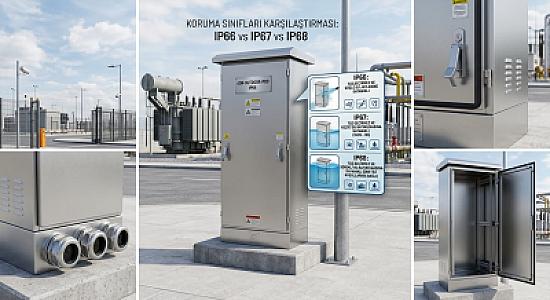
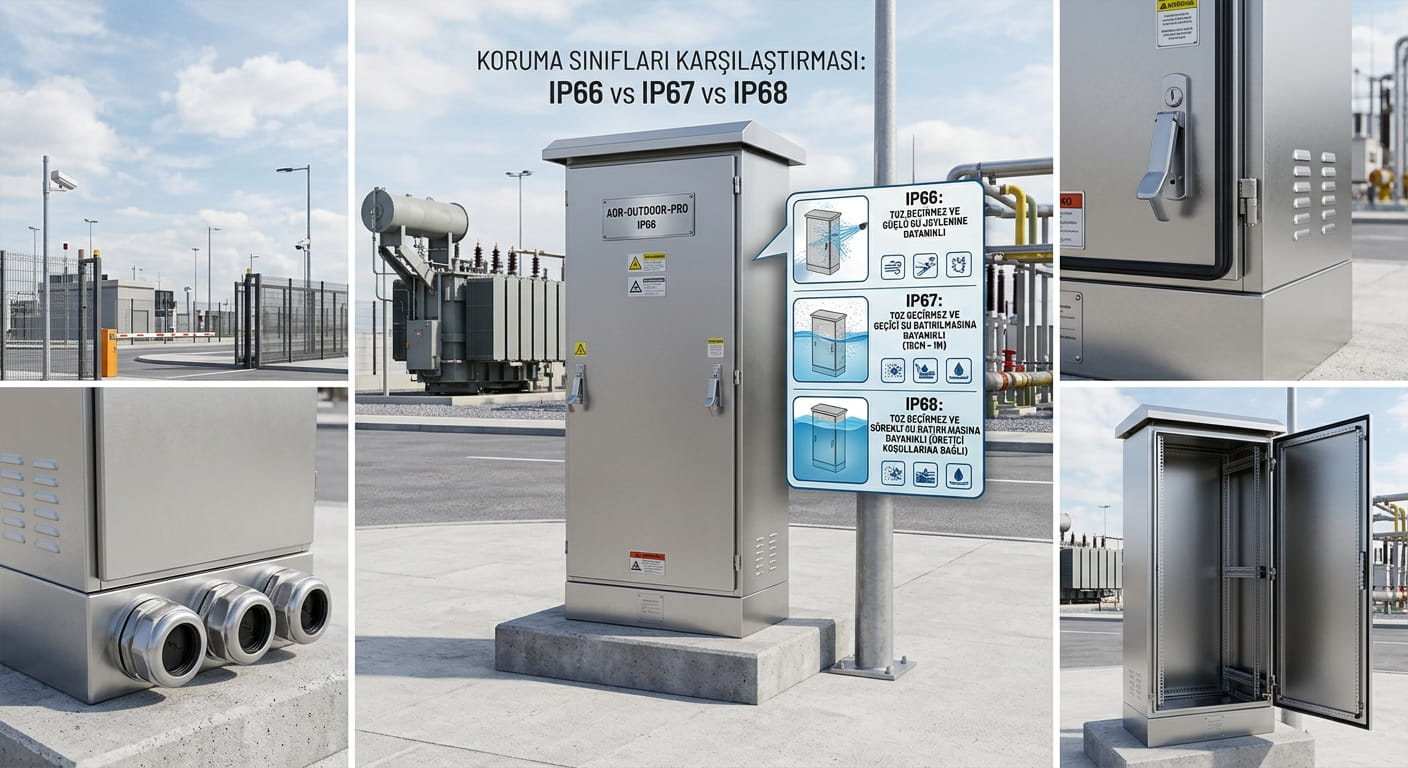
IP66 is a protection rating that provides dust-tight protection (first digit: 6) and resistance to powerful water jets (second digit: 6). This rating is suitable for outdoor panels, field cabinets, and industrial environments requiring washing. Ager’s IP66 Outdoor, IP66 Outdoor Base, IP66 Wall-Mounted Panel, and IP66 KGYS – Field Panels products are manufactured in this protection rating. To technically verify the IP66 certification and test reports for these products, it is recommended to contact the Ager sales/technical support team; access to the relevant documents and pages will be confirmed on a project basis.
What Is IP67? In Which Environments Is It Used?
IP67 is a protection rating that provides dust-tight protection together with resistance to temporary water immersion at depths between 15 centimeters and 1 meter. (For test duration and exact depth parameters, it is recommended to refer to the relevant clause of the IEC 60529 standard or the product certification documents.) This rating is suitable for environments with a risk of temporary flooding or heavy rainfall.
What Is IP68? In Which Environments Is It Used?
IP68 is the highest protection rating, providing dust-tight protection together with resistance to continuous water immersion under conditions specified by the manufacturer. Since the exact test conditions (depth, duration) may vary by manufacturer, it is recommended that these parameters be confirmed through the product certification documents. IP68 is preferred in critical field applications exposed to excessive humidity or flooding. Likewise, a dedicated Ager product in the IP68 rating could not be verified in this review; for projects requiring this protection level, a special specification and confirmation process should be followed.
What Is the Difference Between an IP55 Panel and IP66/IP67/IP68?
An IP55 panel offers a lower level of dust and water protection compared with IP66/IP67/IP68 ratings; it does not completely prevent dust ingress and does not meet powerful jet or immersion scenarios in terms of water protection. Therefore, IP55 is suitable for controlled/indoor environments or applications with limited risk of external factors. For projects involving continuous outdoor use, washing, or flooding risk, IP66 and higher ratings should be preferred. This difference also reflects the fundamental distinction between installations continuously exposed to weather conditions on the exterior and server rooms in indoor, controlled temperature/humidity environments.
How Should You Choose the Correct IP Rating?
When choosing the correct IP rating, the following criteria should be evaluated: whether the cabinet will be located outdoors or indoors, the dust density in the environment, the humidity level, and the need for periodic washing/cleaning. In addition, the type of water exposure the cabinet will be subjected to (rain, leakage, pressure washing, temporary flooding) directly affects the rating selection. In cases of uncertainty, it is recommended to conduct a project-based evaluation with the product certification documents and the Ager technical team.
Short checklist: clarify the outdoor/indoor location, measure the dust and humidity level in the environment, plan the frequency of washing/cleaning, define the type of water exposure (rain, jet, immersion), and add the certification document of the selected model to the project file.
Ager’s IP55/IP66/IP67/IP68 Product Range
Ager offers seven rack cabinet/panel models in different protection ratings from IP55 to IP68 in its catalog: IP66 Outdoor Base, IP66 Outdoor, IP55 Indoor, IP66 Wall-Mounted Panel, IP55 Freestanding Outdoor, IP55 Freestanding Indoor, and IP66 KGYS – Field Panels. For the IP66/IP67/IP68 certification documents and test reports for these products, the Ager sales/technical support team can be contacted; these documents can be used as a reference when selecting the model suitable for the project specification. On the category page, the technical specification tables of the seven products can be examined comparatively, which speeds up determining the model most suitable for the project specification.
As the Ager Technical Department, we emphasize that the selection of the IP protection rating is critical for project reliability and that choosing the wrong rating can lead to early failure under field conditions.
Frequently Asked Questions
What is the difference between IP66 and IP67?
IP66 provides resistance to powerful water jets, while IP67 provides resistance to temporary water immersion at a certain depth. Both ratings are dust-tight; the main difference between them is the type and scenario of water protection. For exact test parameters, the IEC 60529 standard or the product certification document should be taken as the basis.
Which IP rating is required for an outdoor rack cabinet?
For rack cabinets to be used outdoors, at least IP66 protection is generally recommended, because this rating provides dust-tightness and resistance to powerful water jets. In special sites with a high risk of flooding, higher ratings such as IP67 or IP68 should be evaluated.
Is an IP68 cabinet used in every environment?
No. Although the IP68 protection rating offers the highest level, it may not be necessary or economical for every project. IP68 is generally preferred in critical field applications with a risk of continuous water immersion; for standard outdoor use, IP66 may be sufficient for most scenarios.
In which situations is an IP55 panel insufficient?
An IP55 panel is designed for controlled/indoor environments; it offers more limited protection against continuous outdoor conditions, powerful water jets, or heavy dust exposure compared with IP66 and higher ratings. In such conditions, IP66/IP67/IP68 ratings should be evaluated.