What Is a Container Data Center? When Should It Be Chosen?
22.10.2026
For organizations that want to move server, network, and power infrastructure to the site quickly and reliably, the container data center has become an increasingly considered option in recent years. Especially in field operations, temporary capacity needs, or projects where an enterprise data center must be expanded quickly, this solution offers time and flexibility advantages compared with traditional building construction and, when planned correctly, represents a significant alternative. This guide covers what a container data center is, its advantages and disadvantages, its differences from a traditional data center, and the types of projects for which it should be preferred.
What Is a Container Data Center?
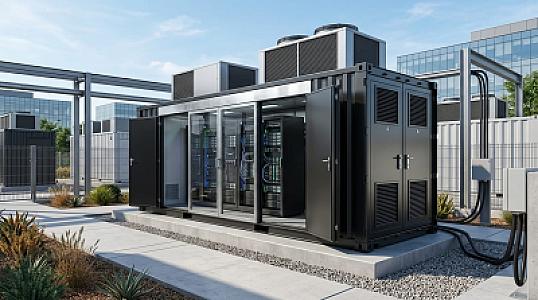
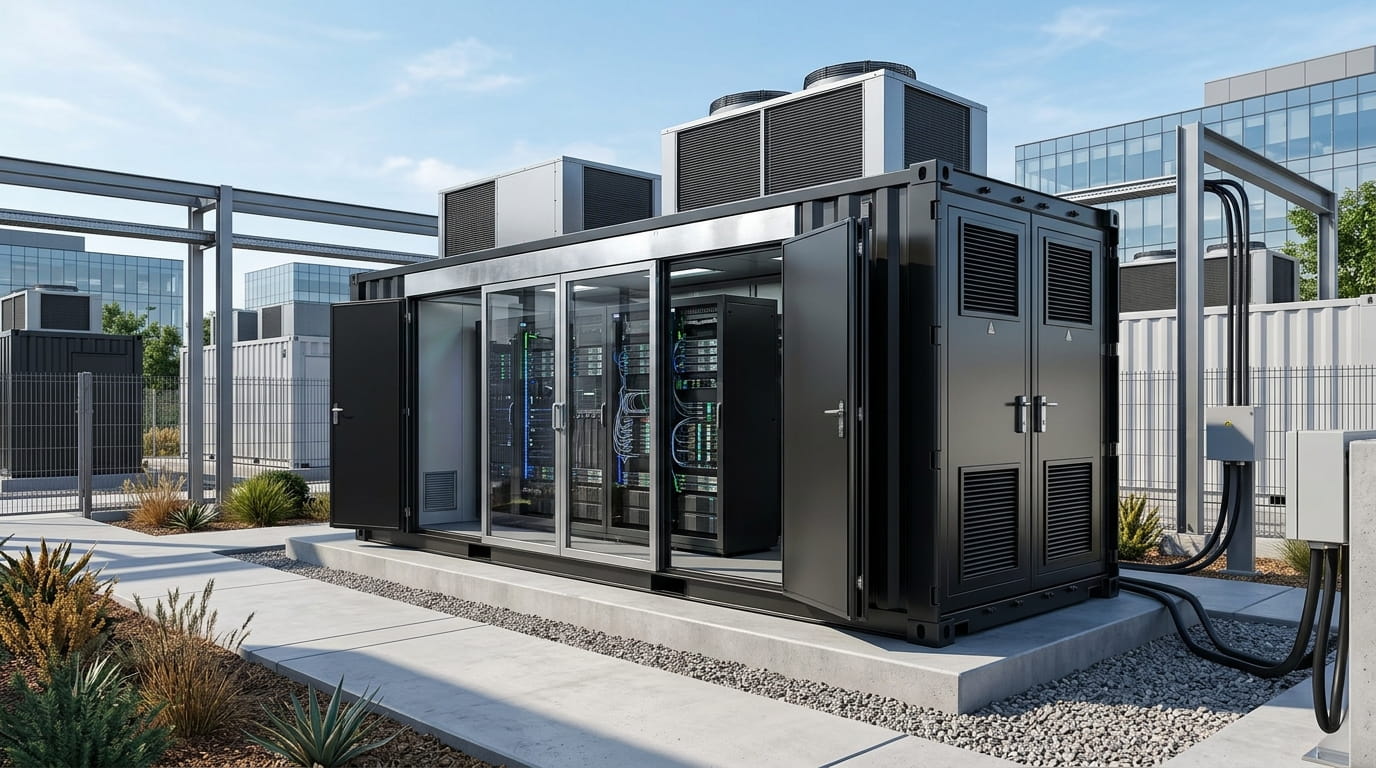
A container data center is a modular computing infrastructure solution in which server racks, power distribution infrastructure, cooling systems, and necessary network equipment are pre-installed and tested in a factory environment inside a standard ISO shipping container or a specially designed steel enclosure, and then delivered ready to be transported and commissioned at the site. Its most fundamental difference from traditional data centers is that most of the construction process is completed at the factory, leaving only positioning, electrical/network connection, and commissioning work at the site.
Advantages of a Container Data Center
Container data centers offer clear advantages over traditional building-based data centers, especially in projects with time and location constraints.
Fast Installation and Modularity
Container solutions that arrive pre-assembled from the factory largely eliminate processes such as on-site construction, structural calculations, and building permits. Because rack cabinets, cabling infrastructure, and cooling units arrive ready in a standardized layout inside the container, on-site commissioning time is significantly shorter than in a traditional building project. The modular structure also allows additional container units to be integrated into the system when needs change. This approach reduces the planning burden on site teams, especially when project schedules are tight.
Portability and Flexibility
Container data centers are designed to be transportable using standard shipping infrastructure such as trucks, trains, and ships. This feature allows the infrastructure to be moved to another site without having to rebuild it from scratch when a project’s life is completed or a location change is required; it offers flexibility especially for temporary field operations or projects operating on rented land. This flexibility is an important decision criterion for organizations that want to plan infrastructure according to changing site needs rather than long-term fixed investment.
Cost Efficiency
Compared with traditional building construction, cost items related to land preparation, structural/reinforced concrete works, and long construction processes are greatly reduced in a container data center. Modules prepared with a serial production logic in a factory environment also reduce the risk of delays and unforeseen construction costs depending on site conditions. (Note: The exact cost difference varies by project, location, and scale; no specific percentage or figure is claimed in this article.)
Disadvantages and Points to Consider
Along with its advantages, a container data center also has limitations that must be evaluated. Its internal volume is limited compared with a traditional server room, so large-scale and continuously growing capacity needs may require coordinated management of multiple container units. In site-type installations directly exposed to outdoor conditions such as temperature, humidity, dust, and vibration, the container shell and internal equipment—rack cabinets, power and cooling units—must be selected with a protection rating suitable for these conditions; otherwise, equipment life and system reliability may be adversely affected. In addition, maintenance and service access must be planned more carefully from a logistics perspective than in a traditional data center, depending on the physical location of the site. Therefore, the container data center decision should be made by evaluating project scale, growth expectations, and site conditions together.
Comparison of Container Data Center and Traditional Data Center
When Should a Container Data Center Be Chosen?
Temporary/Emergency Need Scenarios
In situations such as temporary infrastructure needs after natural disasters, large events, field operations, or transition periods while existing data center capacity is being restructured, a container data center offers a solution that can be commissioned quickly.
Remote/Hard-to-Access Locations
In mining sites, power generation facilities, telecom base station areas, or regions with limited infrastructure, traditional building construction can be both costly and time-consuming. A container data center is a practical alternative because it can be transported to such locations and positioned according to site conditions. In these projects, logistics planning, transportation, and site installation conditions should be evaluated at an early stage.
Enterprise Data Centers with Capacity Expansion Needs
Organizations that want to increase existing data center capacity temporarily or permanently can expand capacity with additional container units without undertaking main building construction. In this scenario, the container unit is connected to the network and power infrastructure so that it can operate integrated with the existing system, enabling capacity increase without interrupting main data center operations. This approach is especially considered when physical space at the existing site is limited.
What Determines Rack Cabinet and Equipment Selection in a Container Data Center?
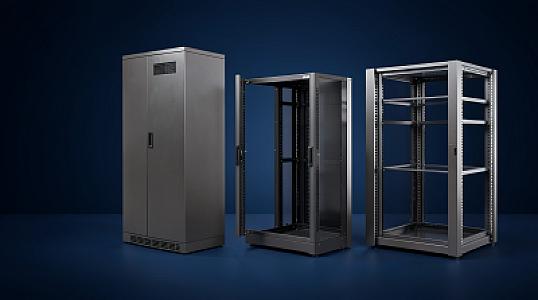
Environmental conditions inside the container—temperature fluctuations, humidity, limited volume—and the external environment where the container is positioned—outdoor/site, dust, humidity, corrosive atmosphere—are determining factors in rack cabinet and equipment selection. In site-type projects, although the container outer shell largely protects the equipment, the rack cabinets placed inside the container should also be selected with a protection rating suitable for environmental conditions such as humidity, dust, and vibration. This is where IP protection ratings—IP55/IP66/IP67/IP68—come into play; which rating is suitable for which environment is discussed as a separate technical topic in the article “IP66 vs IP67 vs IP68.” Due to limited internal volume, cable management and power distribution also become a separate planning topic in container projects; in high-density server layouts, calculating power and cooling capacity together requires that data-center-specific selection criteria—see the article “Data Center Cabinet Selection Criteria”—also be taken into account in container projects. Before publication, which rack cabinet and panel model is suitable for the project specification should be confirmed with the project team using the technical specification tables in the Ager product catalog.
Conclusion and Ager’s Approach in This Area
A container data center offers a strong alternative to a traditional building-based data center for projects that prioritize speed, portability, and modularity. As the Ager Technical Department, we consider that correctly determining the IP protection rating and structural durability suitable for environmental conditions in rack cabinet and panel solutions to be used in container or site-type projects is critical for project success. Ager’s more than 20 years of manufacturing experience and export experience in different geographies provide practical knowledge in designing equipment resistant to site conditions.
This content has been prepared by the Ager Technical Department.
Frequently Asked Questions
How many servers can a container data center hold?
The server capacity of a container data center varies by project depending on container size, selected rack cabinet type, U capacity, and power/cooling infrastructure. It is not possible to give a clear and universally valid number of servers; this figure can only be calculated after the project specification and equipment selection are clarified.
How long does it take to install a container data center?
Installation time varies depending on the scope of factory pre-assembly of the container, site preparation, and transportation logistics. Thanks to assembly largely completed at the factory, on-site time is generally shorter than traditional building construction, but the exact duration depends on project-specific conditions.
In which sectors is a container data center used?
Container data centers are preferred in sectors that require field operations or fast commissioning, such as telecommunications, energy, mining, defense, and the public sector. They are also used for temporary or modular capacity expansion needs of enterprise data centers.
How is cooling provided in a container data center?
Cooling in container data centers is provided by fan-assisted or mechanical cooling solutions designed specifically for the enclosed and compact internal volume of the container. The right cooling approach is determined on a project basis according to equipment density inside the container and outdoor temperature.