
Rack Cabinet Selection: 7 Criteria to Consider
20.09.2026
Rack cabinet selection may appear to be a simple purchasing decision, but it is a technical decision that directly affects equipment safety, business continuity, and long-term cost. In this article, we address the 7 fundamental criteria to evaluate when selecting a rack cabinet under the headings of material, dimensions/U capacity, load-carrying capacity, mounting type, environmental conditions/IP protection class, cable management, and warranty/service reliability. The content provides a general selection guide for B2B buyers in the research phase who have not yet clarified the sector/application in which they will use the cabinet; advanced criteria specific to data centers are addressed in a separate article. A quick summary checklist is also included at the end.
Why Is Rack Cabinet Selection Important?
A wrong rack cabinet selection is often not noticed at the time of purchase; problems emerge over time as equipment failure, increased maintenance cost, or unexpected capacity inadequacy. Therefore, when starting the selection process, systematically evaluating the following 7 criteria together with the project specification is important for both the initial investment and total cost of ownership (TCO).
1. Material and Structural Durability
The body material and structural durability of the rack cabinet determine whether it can safely support the weight of the equipment it will carry and how resistant it will be to corrosion/wear over long-term use. Sheet thickness, welding/joint quality, and surface coating (such as electrostatic powder coating) are indicators of material quality. In cabinets to be used outdoors or in humid environments, the selection of corrosion-resistant material and coating is particularly important; this issue is also directly related to the environmental conditions criterion. During the purchasing process, requesting the material specification and, if available, relevant test/certification documents from the supplier provides assurance for long-term performance. In addition, the cabinet's grounding points and compliance with electromagnetic compatibility (EMC) requirements should also be evaluated separately, especially in projects housing sensitive network equipment.
2. Dimensions and U Capacity
The size of the rack cabinet (width, depth, height) and its U capacity ensure that the equipment to be mounted in the cabinet both fits physically and meets future expansion needs. When calculating U capacity, not only current equipment but also the medium-term growth plan should be taken into account; a cabinet purchased with insufficient capacity may require reinvestment within a short time. The depth dimension should be selected to leave sufficient space for cable management area and airflow, especially for server and network equipment. The width standard (such as 19 inches) should also be clarified at this stage for compatibility with existing equipment. In addition, in projects where multiple cabinets will be positioned side by side or in rows, the spacing between cabinets and the width of the service aisle should also be considered as part of dimension planning.
3. Load-Carrying Capacity
The static and dynamic load-carrying capacity of the rack cabinet must be correctly determined so that it can safely carry the total weight of all equipment to be mounted inside. Load capacity should be evaluated separately not only for the cabinet itself but also for rail systems, drawers, and mounting accessories. Operating at or above the capacity limit can create structural deformation and safety risks; therefore, it is recommended to approach the manufacturer's specified maximum load value with a safety margin. Especially in cabinets containing equipment such as heavy servers, UPS, or power distribution units, it should also be checked that the floor/base load-carrying capacity is compatible with the cabinet's load capacity.
4. Mounting Type (Freestanding, Wall-Mounted, Open Frame)
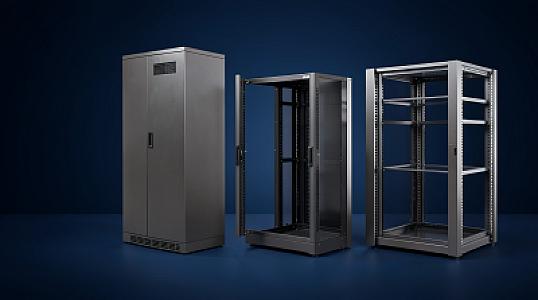
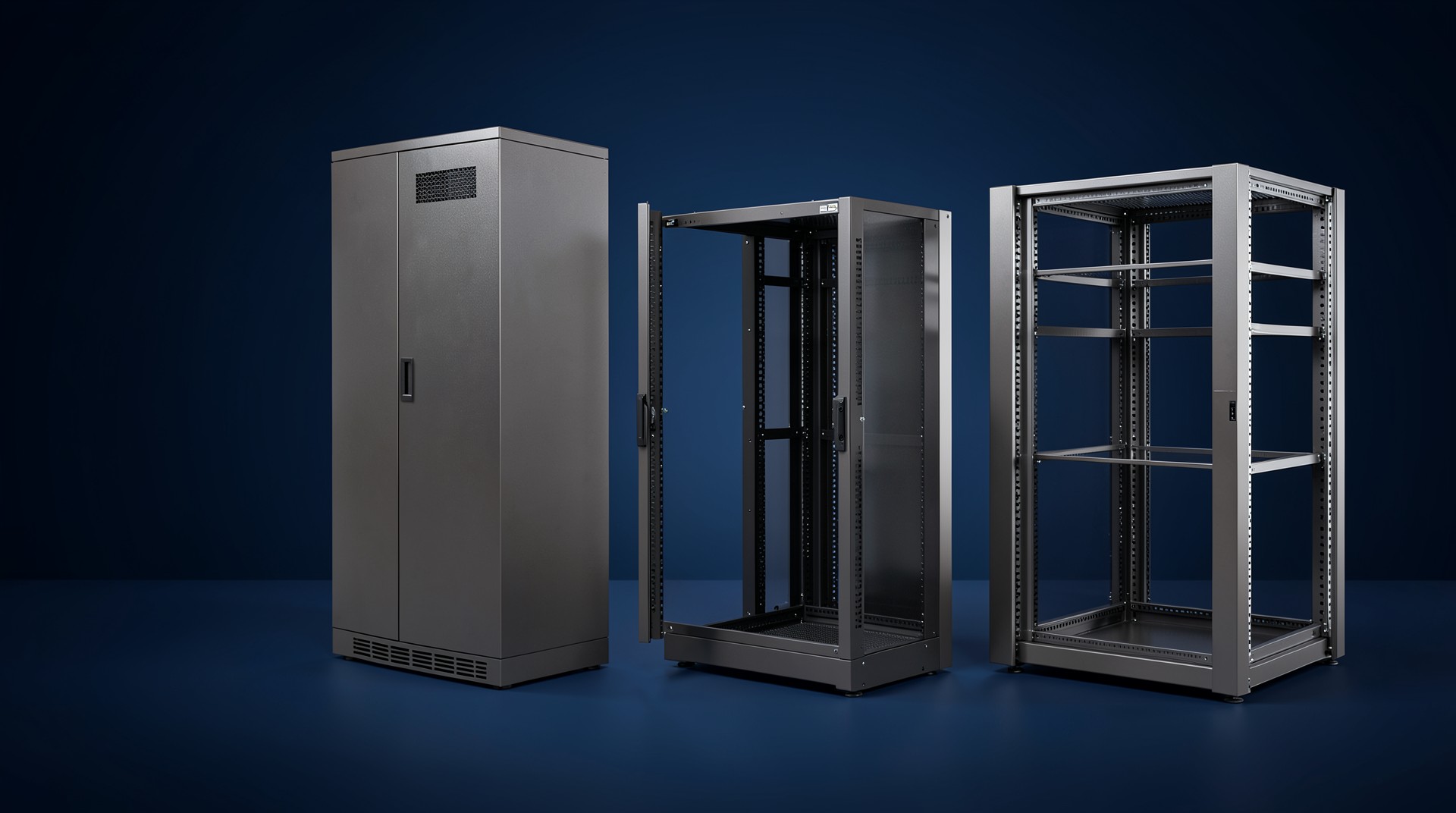
Rack cabinets are manufactured in different mounting types such as freestanding, wall-mounted, and open frame. Freestanding cabinets are preferred in data center/network room projects requiring high U capacity and extensive equipment placement. Wall-mounted cabinets are suitable for installations with less equipment in office or field locations with limited space. Open frame systems are used in environments where ease of access is prioritized and enclosed housing is not required. The choice of mounting type should be determined by factors such as available physical space, security requirements, and frequency of access. When deciding on the mounting type, the possibility of the cabinet being moved or relocated in the future should also be considered; this flexibility is more limited in permanently mounted wall-type cabinets.
5. Environmental Conditions and IP Protection Class
The environment where the cabinet will be located directly affects the choice of IP protection class in terms of indoor/outdoor use, dust and humidity density, and washing requirements. This topic is addressed in detail in our article "IP66 vs IP67 vs IP68: Rack Cabinet Protection Classes Comparison"; in this section, we emphasize only the general framework: controlled indoor environments are usually sufficient with IP55, while outdoor/field projects should consider IP66 and higher classes. Data center-specific cooling and power density requirements are outside the scope of this article; for these topics, please refer to our article "Data Center Cabinet Selection Criteria." If there are multiple locations with different environmental conditions within the same project (for example, one part indoor and one part outdoor), it is recommended to perform a separate IP class evaluation for each location.
6. Cable Management and Ease of Access
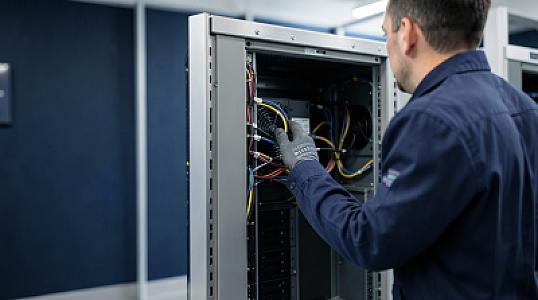
A well-designed rack cabinet facilitates daily operations with cable management channels, patch panel placement, and easily accessible door/panel mechanisms. Disorganized cable management can obstruct airflow and cause thermal problems, as well as complicate maintenance/failure intervention. The front and rear access width of the cabinet should be sufficient for cables to be routed easily during equipment changes. In projects requiring intensive cabling, it is recommended that cable management accessories (channel, ring, brush panel) be evaluated together with the cabinet. Cable labeling and documentation standards are also a practical practice that shortens maintenance time and reduces the risk of human error, especially in cabinets with a large number of equipment.
7. Warranty, Service, and Manufacturer Reliability
A rack cabinet is a long-life infrastructure investment; therefore, the warranty coverage, service support, and spare parts access offered by the manufacturer are important criteria to evaluate in the selection process. The manufacturer's production experience in the sector, reference projects, and certification processes (e.g., ISO 9001 quality management system) create a confidence signal regarding product reliability. Since the exact warranty period and scope may vary by product/project, it is recommended to request written warranty terms from the manufacturer before purchase. Ager's more than 20 years of production experience and wide product portfolio offer purchasing managers the flexibility to select models suitable for different project needs.
Summary Checklist
The following checklist can be used to quickly review the rack cabinet selection process:
• Has material quality and corrosion resistance been confirmed?
• Do dimensions and U capacity meet current and future needs?
• Is load-carrying capacity sufficient for the total equipment weight?
• Is the mounting type (freestanding/wall/open frame) suitable for the location?
• Has the IP protection class suitable for environmental conditions been determined?
• Is cable management and ease of access provided?
• Have warranty, service, and manufacturer reliability been clarified?
Systematically evaluating these 7 criteria reduces both the initial cost and long-term operational risk in rack cabinet selection. For additional criteria specific to data centers, please refer to our article "Data Center Cabinet Selection Criteria"; for post-selection maintenance, see our article "Rack Cabinet Maintenance Guide."
Frequently Asked Questions
What is the most important criterion when selecting a rack cabinet?
No single criterion can be generalized as "most important"; material durability, dimensions/U capacity, load-carrying capacity, mounting type, environmental conditions/IP class, cable management, and warranty/service reliability are a whole that must be evaluated together. The priority of these criteria may vary according to the project specification.
How many U should a rack cabinet be, and how is it calculated?
U capacity is calculated according to the total height requirement of the current equipment to be mounted in the cabinet and the future expansion plan. There is no clear "standard" U number; the calculation should be made separately for each project based on the current and planned equipment list.
How should the budget be determined in rack cabinet selection?
When determining the budget, not only the purchase price but also material quality, warranty/service coverage, and expected service life should be evaluated together. A cabinet with a low initial cost may lead to a higher total cost in the long run due to inadequate material or limited warranty.