
Rack Cabinet Maintenance Guide: 7 Practices That Extend Service Life
19.09.2026
Rack cabinet maintenance is a business practice that must be performed regularly to protect equipment safety, prevent unexpected failures, and extend the service life of the investment. Factors such as dust accumulation, inadequate ventilation, poor cable management, or uncontrolled corrosion can negatively affect equipment performance over time and increase service costs. In this article, we address the 7 fundamental maintenance practices that extend the service life of a rack cabinet under the headings of cleaning, ventilation, cable management, access mechanisms, humidity/temperature monitoring, corrosion control, and periodic professional service.
Why Is Rack Cabinet Maintenance Important?
Neglecting rack cabinet maintenance can result in shortened equipment life, unexpected downtime, and repair costs outside warranty coverage. Regular maintenance supports both equipment safety and protection of the investment. Choosing the right cabinet is also an important factor that reduces maintenance needs — for this, please refer to our article “7 Criteria to Consider When Choosing a Rack Cabinet.”
1. Regular Dust and Dirt Cleaning
Dust and dirt accumulating inside and around the rack cabinet obstruct airflow, reducing thermal performance and potentially causing long-term issues in electronic connections. Cabinet interior surfaces, fan intakes, and ventilation vents should be cleaned at regular intervals. In outdoor sites or areas with high dust density, this cleaning frequency is recommended to be planned at shorter intervals compared with indoor environments. During cleaning, shutting off power to the equipment and using cleaning materials in accordance with manufacturer instructions are important for safety.
2. Ventilation and Fan Inspection
The fans and ventilation systems inside the cabinet should be checked regularly to ensure they are operational; a faulty or dust-clogged fan can cause the internal cabinet temperature to rise rapidly and shorten equipment life. Keeping ventilation vents unobstructed and positioning the cabinet at a sufficient distance from walls or other surfaces also directly affect airflow. Fan inspection should be performed more frequently, especially in cabinets housing high-density equipment.
3. Cable Management and Wear Inspection
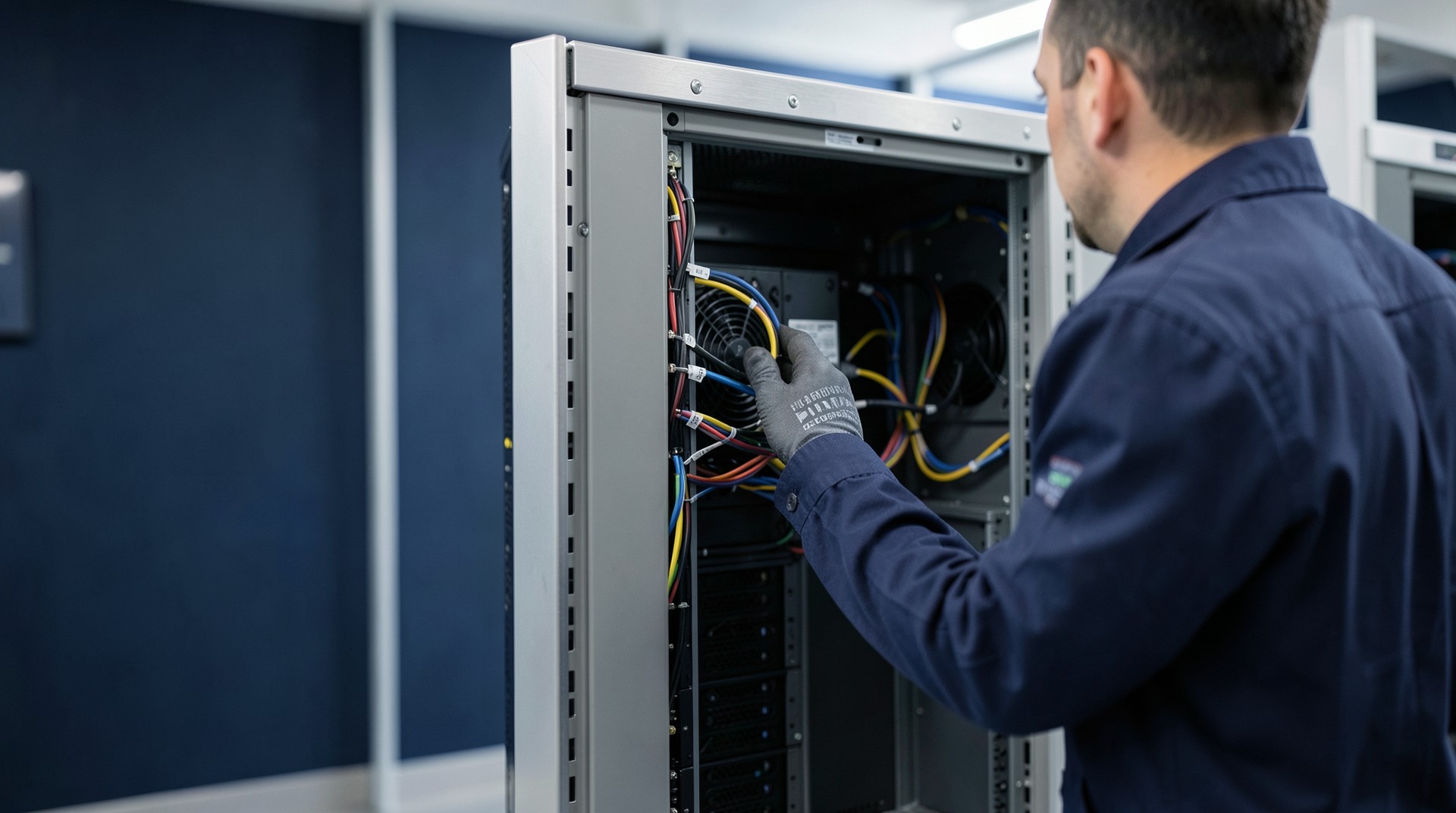
Disorganized or congested cabling both obstructs airflow and creates a risk of wear in cable insulation and loosening of connections over time. Keeping cables organized using cable management channels and labeling systems shortens both maintenance and failure response times. During periodic inspections, cable insulation should be visually inspected for cracks, wear, or loosening at connection points.
4. Lock and Access Mechanism Inspection
Cabinet door locks, hinges, and access panels should be checked regularly; a faulty lock mechanism can both create a security vulnerability and delay access in situations requiring emergency intervention. Especially in cabinets that are opened and closed frequently, wear inspection of hinges and lock mechanisms should be included in the periodic maintenance plan.
5. Humidity and Temperature Monitoring
Monitoring the temperature and humidity level inside the cabinet is important to verify whether the equipment remains within the operating conditions specified by the manufacturer. Humidity and temperature sensors or periodic manual measurements help detect a potential cooling failure early. In installations without continuous monitoring infrastructure, it is recommended that these measurements be performed at least during periodic maintenance visits.
6. Corrosion and Surface Inspection
In IP-rated rack cabinets operating outdoors or in humid environments, corrosion on the body surface, paint/coating damage, or gasket wear should be checked regularly. Minor damage to gaskets and sealing elements can reduce the cabinet’s IP protection performance over time. This inspection should be an integral part of the maintenance plan, especially for field cabinets operating in the IP66/IP67/IP68 class.
7. Periodic Professional Maintenance/Service Plan
In addition to basic maintenance steps that can be performed by the user, professional maintenance carried out periodically by the manufacturer or authorized service provider enables a comprehensive assessment of the equipment’s technical condition. The frequency and scope of professional maintenance may vary depending on usage intensity and environmental conditions; the exact frequency should be determined according to the manufacturer’s warranty/service terms.
For example, a business operating more than one rack cabinet can plan its annual maintenance calendar with a three-tier approach. In the first tier, field personnel visually inspect the cabinet exterior surfaces, ventilation vents, and lock mechanisms; these checks can be included in the daily operational routine and require no additional cost. In the second tier, during periodic maintenance visits, the technical team examines fan performance, the tightness of cable connection points, and humidity/temperature measurement records in more detail, and if necessary completes cleaning or minor repairs within the scope of this visit. In the third tier, the manufacturer’s authorized service subjects the cabinet’s structural integrity, corrosion status, and gasket/sealing elements to a comprehensive technical assessment; findings identified during these visits are recorded in a maintenance report and create a reference for the next visit. This three-tier approach helps detect potential failures at an early stage by combining both daily operational tracking and in-depth technical inspection within the same maintenance plan. The frequency and scope of the tiers should be shaped according to the environmental conditions of the business, as stated above, and the service agreement made with the manufacturer.
Frequently Asked Questions
How often should rack cabinet maintenance be performed?
Rack cabinet maintenance frequency varies depending on the environment where the cabinet is located (indoor/outdoor), dust/humidity density, and usage intensity. As general industry practice, basic checks (cleaning, visual inspection) should be performed at regular intervals, while professional service should be performed according to the period in the manufacturer’s warranty/service agreement; a clear “every X months” rule is not valid for all projects.
Should maintenance differ for outdoor rack cabinets?
Yes. In outdoor rack cabinets, cleaning and surface/gasket inspection should be performed more frequently and comprehensively against dust, humidity, and corrosion risks compared with indoor cabinets. In cabinets operating in the IP66/IP67/IP68 class, the integrity of sealing elements is particularly important.
Who should perform rack cabinet maintenance — the user or a specialist service?
Basic steps such as cleaning and visual inspection can be performed by the user; however, for operations such as fan/cooling system failures, electrical connection inspection, or comprehensive technical assessment, support from the manufacturer’s authorized service is recommended.